On-Grid vs Off-Grid vs Hybrid Solar Systems: Which One Do You Need?
One of the first — and most consequential — decisions when going solar is choosing between an on-grid, off-grid, or hybrid system. Each works quite differently, comes with a different cost structure, and suits a different kind of household or business. Getting this choice right from the start saves you from an expensive re-do later, so it's worth understanding the trade-offs clearly before you commit.
On-Grid Systems: The Most Common Choice
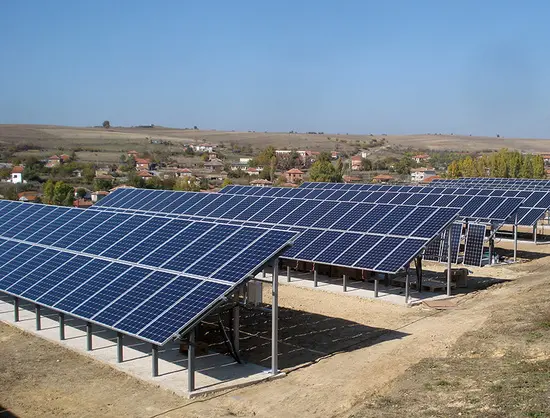
An on-grid (or grid-tied) system is directly connected to the electricity grid through a net meter, with no battery involved. During the day, solar power runs your home and any surplus is exported to the grid for credit; at night, you draw power back from the grid as usual. This is by far the most popular and most affordable option for Indian homes and businesses, because it doesn't need expensive battery storage, qualifies for government subsidy under PM Surya Ghar, and delivers the fastest payback period of the three system types — typically 3 to 6 years.
The one limitation of an on-grid system is that it won't provide power during a grid outage — for safety reasons, on-grid inverters automatically shut off when grid power fails, even if the sun is shining, so your solar panels alone won't keep the lights on during a power cut unless you add battery backup.
Off-Grid and Hybrid: When You Need Backup Power
An off-grid system operates completely independently of the electricity grid, storing solar-generated power in batteries for use whenever needed — day or night, with or without grid connectivity. This makes it the right choice for remote locations with no grid access at all, such as farms, forest guest houses, or telecom towers in areas the grid hasn't reached. The trade-off is cost: battery banks are expensive, need periodic replacement (typically every 5–10 years depending on battery chemistry), and the system has to be sized generously enough to cover several cloudy days in a row without running out of stored power — all of which pushes the overall cost well above a comparably sized on-grid system.
A hybrid system offers a middle path: it's connected to the grid like an on-grid system (and can still export surplus power and benefit from net metering), but also includes battery storage, so critical loads keep running during a power cut. This is increasingly the preferred choice for households and businesses in areas with frequent or unpredictable outages, where the extra cost of batteries is justified by the value of uninterrupted power — for a home office, a shop with refrigeration, or medical equipment that can't afford downtime, for example.
When deciding between the three, the honest starting question is: how reliable is your existing grid supply, and how much does a power cut actually cost you in inconvenience or lost business? If outages are rare and short, an on-grid system offers the best financial return. If outages are frequent or the cost of downtime is high, the additional investment in a hybrid system's battery backup is usually worth it. Pure off-grid systems make sense almost exclusively where there's genuinely no grid connection to begin with.
How Net Metering Works
Net metering is the billing arrangement that makes rooftop solar financially worthwhile for most Indian households and businesses. Once your solar system is installed, the DISCOM replaces your regular meter with a bi-directional net meter that can measure electricity flowing both ways — the power you draw from the grid, and the surplus solar power you export back to it.
During the day, your solar panels generate electricity that first powers whatever appliances are running in your home or business. Any extra power your panels produce beyond what you're using gets exported to the grid, and the net meter records this as a credit. In the evening or on cloudy days, when your panels aren't generating enough, you draw power back from the grid as usual. At the end of the billing cycle, you're only charged for the net units consumed — total units drawn from the grid minus total units exported to it.
This means the grid effectively acts as a free "battery" for your solar system during the day, and you only pay the DISCOM for the shortfall. For most homes with a well-sized rooftop system, this can bring monthly electricity bills down by 70–90%, and in some cases reduce them to the fixed minimum charge only.
Understanding Solar Inverters
The inverter is the component that converts the DC electricity your solar panels generate into the AC electricity your home or business actually uses — and choosing the right type matters almost as much as choosing the right panels. A string inverter is the most common and cost-effective option for straightforward rooftops with minimal shading: all your panels are wired together in a "string" and connected to a single central inverter.
Where a roof has partial shading from trees, water tanks, or neighbouring structures, or where panels face in more than one direction, a solar system with microinverters (one small inverter per panel) or power optimisers can significantly outperform a string inverter, since each panel operates independently rather than the whole string being limited by the weakest-performing panel.
For homes or businesses that want battery backup for use during power cuts, a hybrid inverter is the right choice — it manages solar input, battery charging and discharging, and grid interaction all in one unit, and is a worthwhile upgrade over a standard grid-tie inverter if reliable power during outages is a priority alongside bill savings.
Cost and Payback Period
The cost of a rooftop solar system in India varies with system size, panel and inverter brand, roof type, and installation complexity, but as a rough benchmark, a good-quality on-grid residential system typically costs between ₹50,000 and ₹65,000 per kW before subsidy, using Tier-1, DCR-compliant components. After applying the government subsidy under PM Surya Ghar (up to ₹78,000 for a 3 kW system), the net out-of-pocket cost drops meaningfully.
Payback period — the time it takes for your electricity bill savings to equal your net investment — usually works out to between 3 and 6 years for most residential and commercial systems in India, depending on your local electricity tariff, how much of your solar generation you self-consume versus export, and how well the system is sized to your actual usage pattern. After the payback period, the electricity generated is essentially free for the remaining 18–22 years of the panel's rated life, making solar one of the few home investments that pays for itself and then keeps paying dividends.
How to Choose the Right Solar Installer
The quality of your solar installation depends heavily on who installs it, not just what equipment you buy. When evaluating an EPC (Engineering, Procurement and Construction) company, start by checking whether they're empanelled with your state's renewable energy agency and DISCOM — this is a mandatory requirement to be eligible for government subsidy under schemes like PM Surya Ghar and PM-KUSUM.
Ask to see examples of their completed installations in your area, and if possible, speak to a couple of their past customers about the after-sales experience — how they handled warranty claims, whether the system's actual output matched what was promised, and how quickly they responded to service requests. A trustworthy installer will always conduct a proper site visit before quoting, checking your roof's shading, orientation, structural strength, and your actual electricity consumption pattern, rather than quoting a one-size-fits-all package over the phone.
Finally, insist on a clear, itemised quotation that separately lists the panel brand and wattage, inverter brand and capacity, mounting structure type, cabling and balance-of-system components, and installation charges — along with the warranty terms for each component (panels typically carry a 25-year performance warranty, inverters 5–10 years). Avoid installers who are vague about brands or bundle everything into a single opaque number.
Why Solar Makes Sense in India
India receives an average of 300 sunny days a year and among the highest solar irradiance levels in the world, which is precisely why the country has made solar power a cornerstone of its energy policy. For homeowners and businesses, this translates into a straightforward proposition: install a solar system once, and it keeps generating free electricity from sunlight for the next 25 years or more, dramatically cutting down what you pay to the grid.
Rising electricity tariffs, frequent hikes by state electricity boards, and the volatility of diesel prices for backup power have made solar an increasingly obvious financial decision, not just an environmental one. Combined with central and state government subsidies, the payback period on a typical residential or commercial rooftop solar system in India today ranges between 3 to 6 years, after which the electricity generated is effectively free for the remaining life of the system.
Beyond the financial case, solar also insulates households and businesses from unplanned power cuts, voltage fluctuations, and the uncertainty of grid supply in many semi-urban and rural parts of the country — a benefit that's often just as valuable as the money saved.
Maintenance and Lifespan
One of solar power's biggest practical advantages is how little maintenance it needs. With no moving parts, solar panels typically require nothing more than periodic cleaning to remove dust, bird droppings, and pollen that can reduce output — in most parts of India, cleaning once every 2–4 weeks (more frequently during dry, dusty months, less during and after the monsoon) is enough to keep output close to optimal.
Panels themselves are extremely durable, typically carrying a 25-year performance warranty guaranteeing they'll still produce at least 80–85% of their original rated output after a quarter century — degradation of roughly 0.5–0.8% per year is normal and expected. Inverters have a shorter lifespan than panels, typically needing replacement once every 10–15 years, so it's worth factoring this into your long-term cost calculations. Beyond cleaning and an occasional visual inspection for loose wiring or physical damage, a well-installed solar system needs very little hands-on attention to keep delivering reliable output year after year.
Common Myths, Busted
A persistent myth is that solar panels don't work on cloudy or rainy days — in reality, panels still generate electricity from diffused sunlight on overcast days, just at a reduced output (typically 10–25% of peak capacity), and India's overall annual sunshine is more than enough to make solar worthwhile even accounting for the monsoon months. Another common misconception is that solar panels require constant maintenance or frequent replacement — as covered above, the reality is closer to occasional cleaning with a 25-year usable life.
Many people also believe solar is only viable for large houses or businesses with big roofs, but modern high-efficiency panels mean even a modest 1–2 kW system on a small rooftop can meaningfully cut a household's electricity bill. Finally, there's a widespread assumption that solar installation is prohibitively expensive — while the upfront cost is real, government subsidy schemes, falling equipment prices, and financing options available through most installers have brought solar within reach of a much wider range of households than most people assume.
Frequently Asked Questions
Can I upgrade an on-grid system to hybrid later by adding batteries?
In many cases, yes — if your inverter is hybrid-capable or can be paired with a compatible battery system, batteries can be added later. It's worth discussing this with your installer at the time of initial installation, so the wiring and inverter choice keep this option open.
Do hybrid systems still qualify for the PM Surya Ghar subsidy?
The subsidy applies to the on-grid, net-metered portion of the system. Battery storage added on top is generally not covered by the subsidy and is an additional out-of-pocket cost.
How many hours of backup does a typical hybrid system battery provide?
This depends entirely on battery capacity and your load — a modest battery bank might cover a few essential appliances (lights, fans, WiFi router, refrigerator) for several hours, while a larger bank can run more of the household through an extended outage.
Is off-grid solar cheaper than staying on diesel generator backup?
Over the long run, yes — while the upfront cost of an off-grid system is higher than a generator, the ongoing cost of diesel, generator maintenance, and generator replacement typically makes solar-with-battery cheaper within a few years, alongside being quieter and pollution-free.
Which system type is best for a small shop or office?
Most small commercial setups do well with an on-grid system if outages are infrequent, or a hybrid system with modest battery backup if even short outages disrupt billing, refrigeration, or customer service.
Final Thoughts
There's no universally "best" system type — the right choice depends entirely on your grid reliability, budget, and how much you value backup power during outages. A good installer will walk you through this trade-off honestly rather than pushing whichever system is easiest to sell, so don't hesitate to ask detailed questions about your specific situation before deciding.